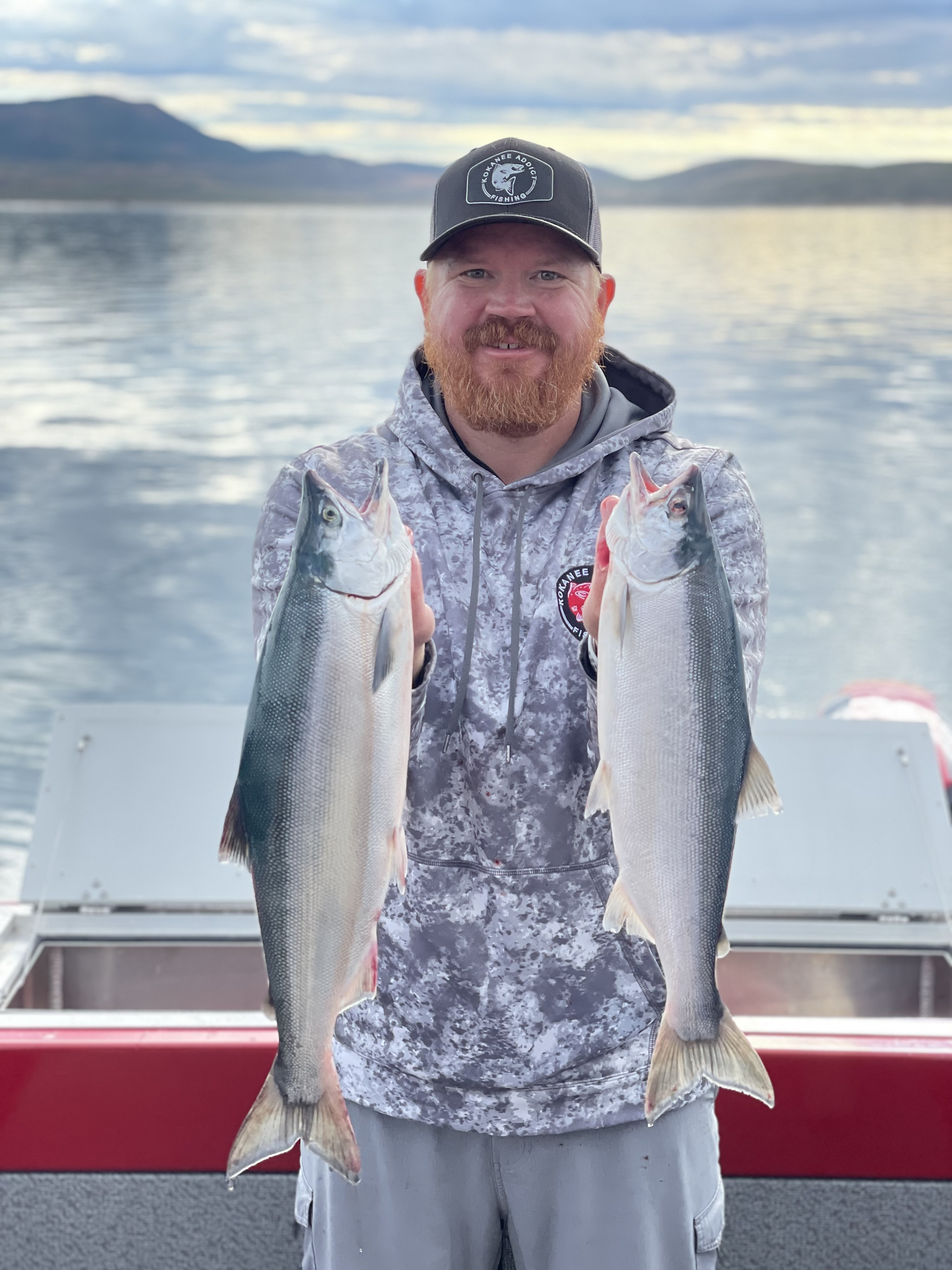
Trolling Speed and Patterns
Speed is one of the most important variables in kokanee trolling, and small changes make a big difference. We will cover the ideal speed range, how to measure it accurately at depth versus at the surface, and why S-turns and speed changes can trigger strikes from fish that are following but not committing. Your GPS speed and your lure speed are not the same thing, and understanding that distinction is key.
Time of Day and Seasonal Patterns
Kokanee feeding activity varies significantly throughout the day and across the season. Early morning and late evening are generally the most productive windows during summer, but spring and fall have different patterns. We will break down what to expect month by month, how water temperature changes affect fish location, and when the pre-spawn bite turns on — which is some of the best kokanee fishing of the year.
Troubleshooting on the Water
Even experienced anglers have slow days. When the bite is off, having a systematic approach to adjusting your presentation saves the trip. We will cover the adjustment hierarchy — depth first, then speed, then color, then location — and share practical tips for reading conditions, managing multiple rods, handling fish at the boat, and keeping your catch fresh for the table.