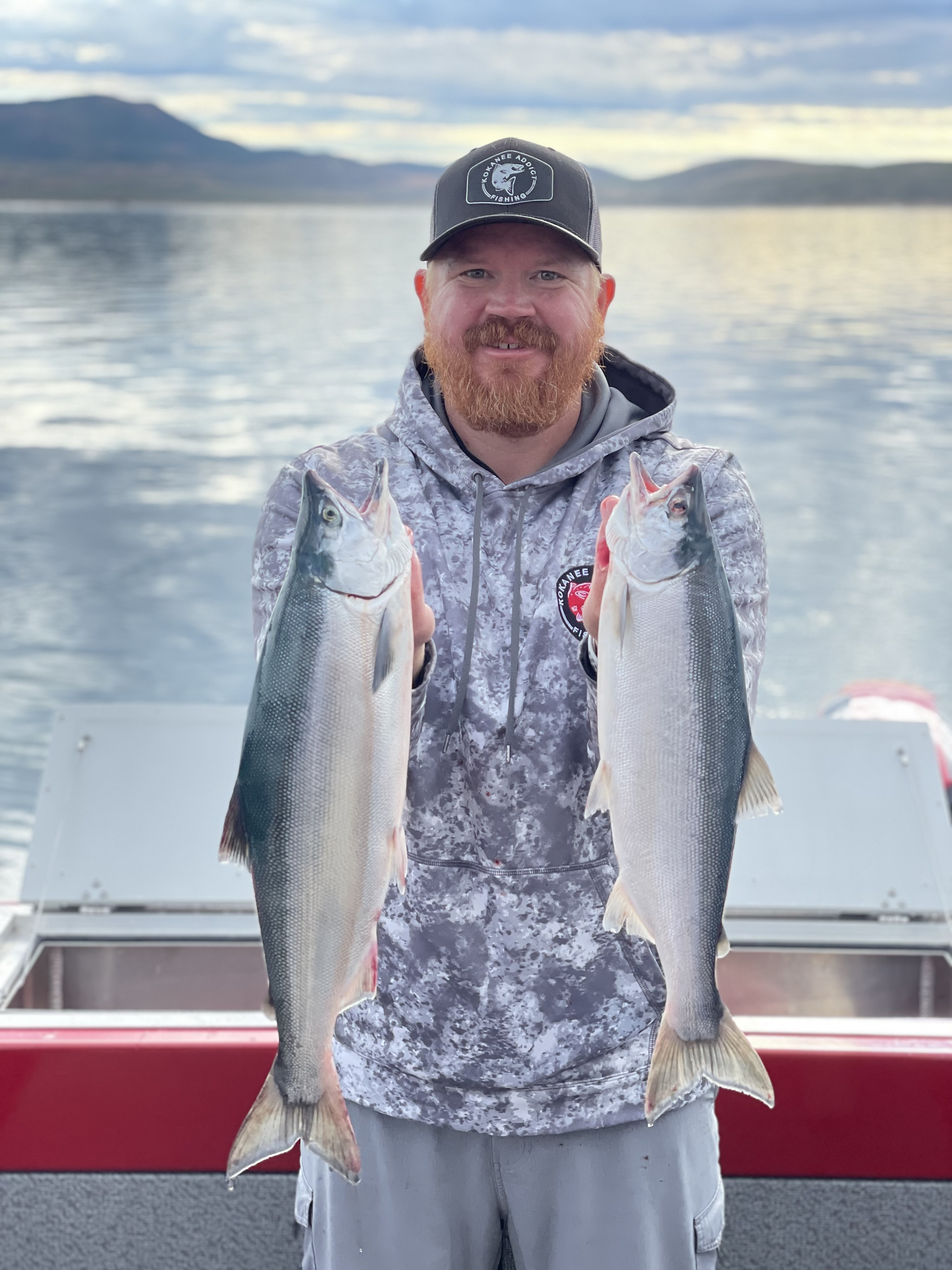
The Complete Rig
Now that you have your rod, reel, dodger, lure, and downrigger, it is time to tie it all together. We will walk through the full rig from mainline to hook, covering the exact order of components, what connects to what, and the hardware you need in between. A clear diagram and step-by-step instructions will make your first time rigging up straightforward.
Leader Lengths and Setback
The distance between your dodger and lure — and between your downrigger weight and dodger — directly affects lure action and fish response. Too short and the lure does not move naturally. Too long and the dodger cannot impart its action. We will cover the standard distances that work in most situations and when to adjust them based on conditions and fish behavior.
Knots and Terminal Connections
You only need to know a few knots to rig a kokanee setup, but they need to be tied correctly. A failed knot means a lost fish and lost tackle. We will cover the improved clinch knot, the Palomar knot, and when to use snap swivels versus tying direct. We will also discuss snubbers — the rubber shock absorbers that protect against soft-mouth tearouts during the fight.